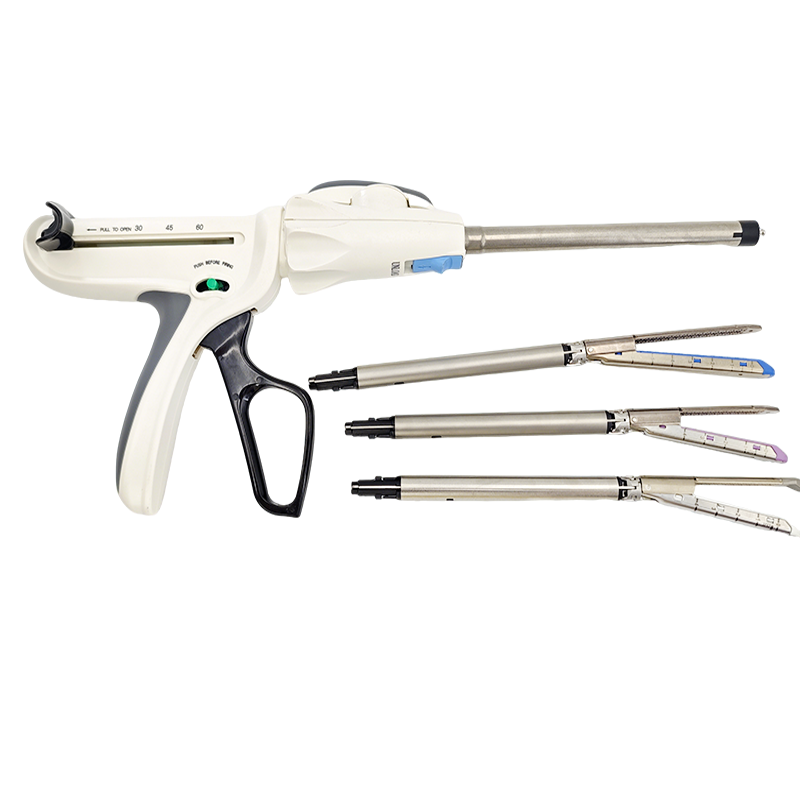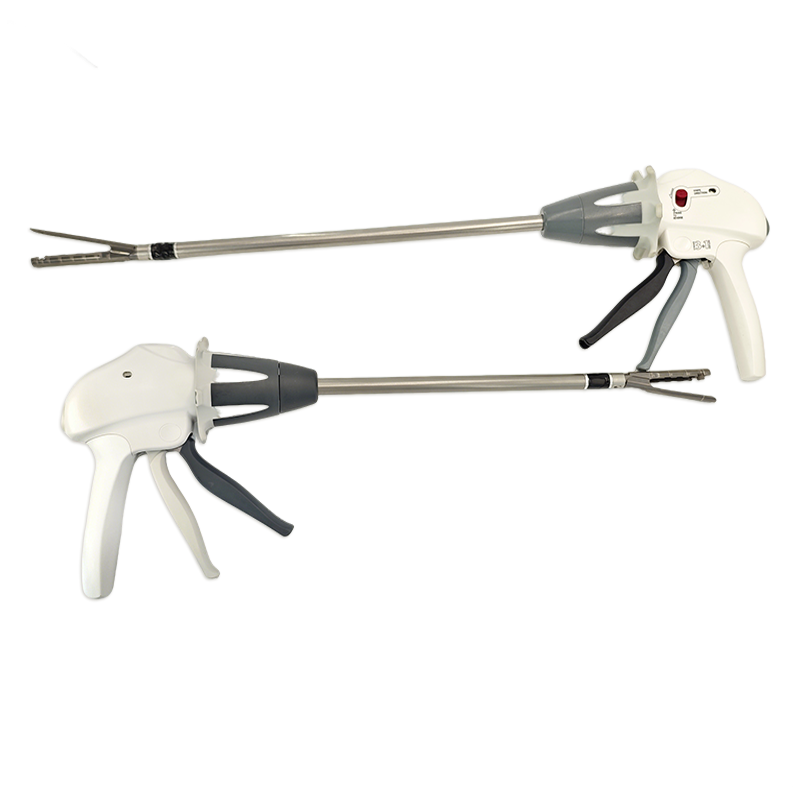
Veterineary Laparoscopic Stapler and Components
Rotating bend structure for narrow, deep laparoscopic visualization and operation
Product Basic Information
| Product Name | Veterineary Laparoscopic Stapler and Components |
| Standard | Q/SCZL 003-2026 |
| Registered Entity | Shanghai Shenchuang Zhilian Trading Co., Ltd. |
| Device Type | Sterile Single-Use Veterinary Laparoscopic Surgical Instruments |
| Sterilization Method | Ethylene Oxide Sterilization |
Full Specifications
| Pole Specifications | Short/Medium/Long |
| Shaft Base Length L1 | 60~260mm (±5mm) |
| Staple line base length L2 | 44.5–60.5mm |
| Outer/Middle/Inner Nail Forming Height | 2.5~4.8mm |
| Color indicator | Green/Blue/White/Gold/Black/Purple |
| Component Type | Rotary |
| Main Material | Medical-grade stainless steel + ABS |
| Sterilization Method | Ethylene Oxide Sterilization |
| Packaging Specifications | 1 units/box (includes staple cartridge cutting assembly) |
Compatible Animals
Applicable Scenarios
Designed for laparoscopic abdominal surgery in companion and livestock animals, including dogs, cats, pigs, cattle, and sheep. Ideal for transection, resection, and anastomosis of intracavitary organs such as the intestines, stomach, bile ducts, and urinary tract. Simultaneously performs tissue cutting and dual-layer anastomotic closure. Features a rotating, articulated tip for enhanced visibility and access in narrow, deep abdominal spaces.
Not applicable:Not suitable for suturing severely calcified hardened tissue, extremely thin eroded mucosa, organs with excessive thickness and high tension, or superficial wounds on the body surface.
Product Performance Features
- 1Smooth exterior with no burrs; blunt, non-sharp tip to prevent injury to abdominal organs. Matte finish on shaft and components eliminates glare for clear surgical visualization.
- 2The suture needle tip is sharp and free of burrs or dents; the cutting blade has a hardness ≥ 377HV0.2, cutting force ≤ 0.80N, and produces smooth, burr-free tissue edges after cutting.
- 3Easy assembly and disassembly with click feedback when fully seated. Jaws, joints, and rotating mechanisms move smoothly without sticking; bending instruments can fire and reset normally at maximum swing angle.
- 4One-handed operation with stable jaw clamping and closing force. Staple formation meets standard "B" shape; the distance from the staple line to the far end is ≥1.5 times the staple length longer than the cut line.
- 5Metal parts have a surface roughness of Ra ≤ 1.6 μm and show no rust or discoloration after a 2-hour neutral salt spray corrosion test.
- 6Anastomotic pressure resistance ≥ 3.6×10³ Pa; no leakage (> 10 drops) after holding for 15s. Equipped with multiple safety features: firing status feedback, empty staple cartridge protection, and component lockout.
Standard Operating Procedure
- 1Preoperative Inspection: Verify that the outer packaging is intact, airtight, dry, and within the expiration date. After opening, inspect the device body, shaft, and staple cartridge for deformation, missing staples, or blade damage.
- 2Component Assembly: Select the cartridge with the appropriate staple height based on the thickness of the surgical tissue. Align it with the instrument slot and insert until you hear an audible click to confirm secure locking.
- 3Endoscopic Insertion: Gently introduce instruments through a veterinary laparoscopic trocar port. Adjust the angle by rotating and bending the shaft, then position the target tubular organ flatly between the jaw tips.
- 4Firing: After confirming proper organ alignment, fire the device with a single hand using steady pressure to simultaneously cut tissue and form double rows of staples. Each cartridge is designed for a single firing only.
- 5Remove and inspect: Slowly release the jaws, rotate to adjust the angle, and withdraw the instrument smoothly. Visually verify that the staples are fully formed, the cut edges are clean, and the anastomosis site is leak-free.
- 6Post-operative handling: This is a single-use device. After use, dispose of it along with the spent staple cartridge in accordance with veterinary medical waste management regulations.
Safety Precautions
- Intended solely for laparoscopic abdominal organ anastomosis in livestock and companion animals. Strictly prohibited for non-veterinary clinical use.
- Do not use if packaging is damaged, moistened, expired, the shaft is bent or deformed, the blade is chipped, staples are missing from the cartridge, or safety mechanisms have failed.
- Match staple cartridge height precisely to the actual thickness of the organ tissue. Tissue that is too thin may tear, while tissue that is too thick can result in an insecure anastomosis, leading to leakage and bleeding.
- If the jaw jams, rotation stalls, firing feels weak, staples deform, or cutting is incomplete during surgery, stop immediately and replace with a new instrument.
- Do not bend or twist the shaft forcefully, forcibly manipulate rotating joints, or risk internal structural breakage and fragment retention within the abdominal cavity.
- Do not reuse. Reuse can dull the blade, corrode the staples, and reduce clamping force, leading to postoperative abdominal infection.
- The safety lock prevents firing when the staple cartridge is not loaded or is empty. Do not force the protective structure open.
Storage and Transportation Requirements
Storage Conditions
Store in a cool, clean, dry, and well-ventilated area away from corrosive gases. Do not store outdoors or expose to sun and rain. Do not store with toxic, hazardous, odorous, flammable, or explosive materials.
Shipping Requirements
Use clean, dry transport carriers. Ensure protection against rain, moisture, sun exposure, and compression throughout transit. Handle with care during loading and unloading. Stack boxes according to directional arrows on the packaging. Do not mix with sharp, corrosive, or toxic goods during transport.
Expiration date
2